
What Is Embodiment? How the Body Holds the Key to Healing and Wholeness

The body is your temple. Keep it pure and clean for the soul to reside in.
B.K.S Iyengar, founder of Iyengar Yoga
Moving Beyond Intellectual Understanding Into Lived Experience
The word “embodiment” appears frequently in wellness and personal development spaces, yet its true meaning often remains vague.
Let’s clarify this concept with practical understanding.
Embodiment fundamentally describes inhabiting your physical form from within rather than analyzing yourself from an external viewpoint.
It distinguishes between conceptual knowledge and visceral, felt experience.
Many assume they’re embodied simply because they notice their body exists.
However, mere awareness doesn’t constitute embodiment.
Recognizing Your Body Isn’t the Same as Inhabiting It
In this blog post, we’ll dive deep into what embodied healing really means by exploring both the concept of embodiment and the essence of healing itself.
Here’s a video I made about the deep subject of embodied healing:
If you prefer to listen to audio podcasts, the BioSoul Integration Podcast and this episode can be found wherever you listen to your audio podcasts:
People frequently tell me they’re highly attuned to their physical sensations.
They mention practicing somatic techniques for years.
They describe tracking tension and discomfort carefully.
Yet they continue experiencing instability, disconnection, and repetitive emotional loops.
What explains this paradox?
True embodiment transcends observing sensations—it involves allowing sensations to reshape your internal landscape.
You can register pain, anxiety, or emotional activation while simultaneously resisting it beneath conscious awareness.
This resistance typically operates at the nervous system level, not the thinking level.
Embodiment starts when your body gains permission to finish interrupted experiences from the past.
How the Nervous System Defines Embodiment

Through a nervous system lens, embodiment means one essential thing.
Your system possesses sufficient safety to experience present-moment sensations without retreating into mental activity, rigid control, or shutdown.
That’s the core definition.
Embodiment doesn’t involve forcing yourself to be present.
It doesn’t mean aggressively “dropping in.”
It certainly doesn’t mean suppressing difficult feelings to maintain positivity.
Embodiment concerns your system’s capacity to hold experience.
With adequate capacity, sensations can flow naturally.
As sensations flow, your internal energy reorganizes itself.
When energy reorganizes, ingrained patterns transform.
This reveals why embodiment represents a physiological condition rather than a mental framework.
Understanding Why Embodiment Feels Inaccessible

If embodiment is inherently natural, why does achieving it seem so difficult?
The answer lies in our earliest formative experiences occurring before verbal memory develops.
During prenatal development and early childhood, our nervous systems categorized certain feelings as dangerous.
These might include fear, rage, sadness, vulnerability, or intense vitality.
The body responded with protective intelligence.
Muscles developed chronic tension patterns.
Breathing became restricted or shallow.
Conscious awareness relocated upward into thinking centers.
Eventually, this protective state becomes our baseline normal.
In reality, it’s a condition of incomplete embodiment.
Embodiment practices don’t repair brokenness.
They help your body recognize it no longer requires outdated protection strategies.
Embodiment Restores Genuine Agency
A hallmark indicator of embodiment is the presence of authentic choice.
When embodied, you can sense an urge without automatically acting on it.
You can experience strong emotions without losing yourself in them.
You can remain present without dissociating or attempting to control outcomes.
This capacity naturally generates clearer personal boundaries, healthier connections, and more genuine self-expression.
These changes don’t stem from learning new behavioral techniques.
They emerge because your nervous system stops defaulting to survival-based reactions.
Distinguishing Emotional Release from Embodiment

This distinction matters profoundly and often creates confusion.
Embodiment differs significantly from emotional catharsis.
You might cry intensely, express anger, write extensively, or process feelings regularly while remaining disembodied.
Actually, emotional discharge without nervous system regulation can reinforce problematic patterns.
Embodiment manifests more subtly than most people anticipate.
It might appear as remaining with uncomfortable sensations slightly longer than usual.
It could involve noticing minute shifts in your posture or breathing rhythm.
It includes permitting trembling, warmth, or relaxation without immediately interpreting these responses.
These delicate changes signal that vital energy is reintegrating rather than being expelled or controlled.
The Transformations That Accompany Deepening Embodiment

As embodiment becomes more established, people commonly observe specific shifts.
Reduced reactive responses without emotional numbing.
Confidence rooted in physical presence rather than mental constructs.
Enhanced digestion, sleep quality, and overall vitality.
Physical and emotional symptoms losing their dominating influence.
A tangible sense of inhabiting the present rather than pursuing future wholeness.
Crucially, embodiment doesn’t eliminate life’s difficulties.
It alters how experiences move through your system.
Rather than something you resist or manage from outside yourself, life becomes something you engage with as an active participant.
Embodiment Unfolds Progressively, Not Completely
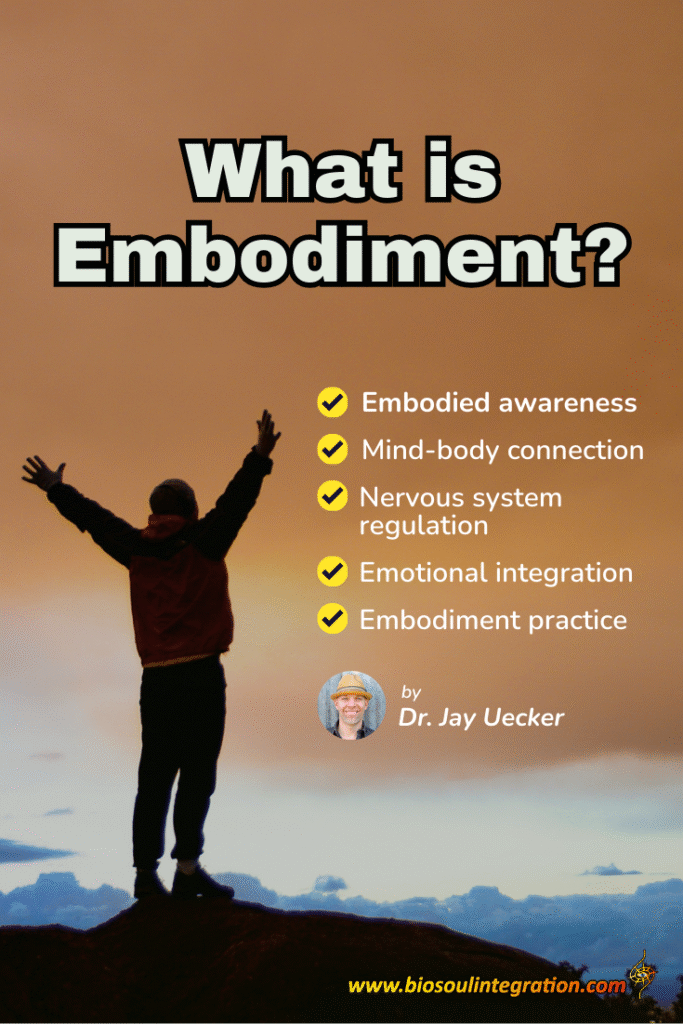
No ultimate state of “total embodiment” exists as a final destination.
Embodiment reveals itself in successive layers over time.
Each layer reconnects you with aspects of yourself that were previously inaccessible—often for valid protective reasons.
The body doesn’t accelerate this unfolding on demand.
We shouldn’t attempt to rush it either.
Genuine embodiment respects your nervous system’s inherent wisdom and its natural integration timeline.
A Closing Reflection
Embodiment isn’t about constructing a new identity.
It’s about permitting your authentic self to finally reside within your physical form.
The journey involves meeting yourself where you are rather than forcing yourself into an idealized state.
As safety deepens within your nervous system, embodiment naturally emerges as a lived reality rather than an aspirational concept.
The Ultimate Embodied Awareness Guide
Embodied healing is a process of becoming whole by bringing awareness back to the parts of ourselves that were shaped by survival.
These patterns formed in the nervous system long before we could think our way out of them, and they don’t unwind through insight alone.
They resolve when they are met, felt, and included in awareness.
Life is continually inviting us into this kind of embodied awareness.

When we learn to listen to the body—rather than override it—we create the conditions for integration to occur naturally.
As the nervous system reorganizes, we experience greater stability, clarity, and a sense of being more at home in ourselves.
From this place, we don’t have to force change.
We live and act with more authenticity, because less of our energy is tied up in holding ourselves together.
If these ideas resonate with you, you’ll find a deeper exploration of them in my book, If It Didn’t Hurt: How To Resolve Your Pain And Discover Your Life Purpose.
Click the link above to get a FREE pdf copy of my book.
Exploring the Embodied Path: A Peek Into My Online Course
Here’s a video I made about the importance of embodiment and my embodied path online course:
I be remiss if I didn’t mention my embodied healing online course called “The Embodied Path Online Course: Eight Steps to Expressing Your Soul’s Essence, Purpose, and Calling.”
As the name suggests, there are eight basic exercises that are at the heart of the course.
The structure involves six simple yoga poses.
But these aren’t intense strengthening poses.
While it’s important to build core strength, we often forget the need to also cultivate deep relaxation as part of the process of embodiment.
These poses are based on that idea.
When the nervous system is in defense mode, strengthening exercises can create more protective armor.
Instead, the focus is on gentle movements, promoting ease and relaxation in specific parts of the body that are connected to our survival brain.
Click the link above to check it out.
I look forward to helping you express more life,
Dr. Jay
About the Author Dr. Jay Uecker
Dr. Jay Uecker is the founder of the BioSoul Integration Center near Boulder, Colorado where he's been practicing for over 20 years. He’s an author, chiropractor, healer, and online soul integration coach who weaves Network Spinal Analysis, intuitive Parts Work, Brainspotting, SomatoRespiratory Integration, and body-centered awareness practices into his own technique, which he calls BioSoul Integration. His work helps people release unconscious resistance stored in the nervous system so they can embody their soul’s gifts and express their purpose more fully. Dr. Jay offers group healing sessions and one-on-one care, both in-person and online. He also offers a self-paced online course and a growing collection of transformational books. For a limited time, claim your FREE copy of If It Didn't Hurt: How to Resolve Your Pain and Discover Your Life Purpose.
Related Posts
How to Feel Safe in Your Body (When Nothing Else Has Worked)
How to Listen to Your Body: An Invitation to Sacred Presence
Embodied Awareness: What It Is—and Why Thinking Your Way Through Healing Doesn’t Work
The Spiritual Root of Anger: Discovering Its Hidden Power
What Does It Mean to Be Embodied? A Nervous-System Based Understanding of Embodiment
Embodiment: Living Fully Within Your Physical Form