

Embodiment: Living Fully Within Your Physical Form

The body is not an object, but a subject.
Thomas Hanna, founder of Somatics
Understanding a Widely Used but Rarely Experienced Concept
Embodiment appears constantly in contemporary wellness conversations yet remains poorly understood by most people.
The term surfaces in therapeutic settings, meditation classes, movement practices, and self-development workshops.
Despite its frequent use, genuine embodiment eludes many who discuss it.
Common misconceptions suggest embodiment equals feeling peaceful.
Others believe it means staying centered in the present moment.
Some associate it with emotional regulation skills.
Many think it involves maintaining optimistic mental states.
Embodiment doesn’t originate in your thinking mind.
Embodiment emerges when your nervous system achieves sufficient safety to fully occupy your physical form.
This fundamental distinction transforms everything about the concept.
Defining Embodiment at Its Core
In this blog post, we move beyond thinking about the body and explore what it really means to live from within it.
Here’s a video I made about the deep subject of embodied healing:
If you prefer to listen to audio podcasts, the BioSoul Integration Podcast and this episode can be found wherever you listen to your audio podcasts:
Embodiment means existing completely within your body across emotional, energetic, and physiological dimensions.
It transcends simply noticing your body’s presence.
It goes beyond mentally cataloging physical sensations.
It involves genuinely living from your body’s interior landscape.
Embodied individuals don’t experience life exclusively through cognitive processes.
They encounter existence from their body’s core outward.
Their thoughts, feelings, physical alignment, breath patterns, and behaviors emerge from internal coherence rather than chronic muscular holding, survival-based reactions, or unconscious protective strategies.
Embodiment isn’t about dominating your physical form.
It concerns allowing your body to reorganize according to its inherent wisdom.
Why Embodiment Remains Elusive for Many
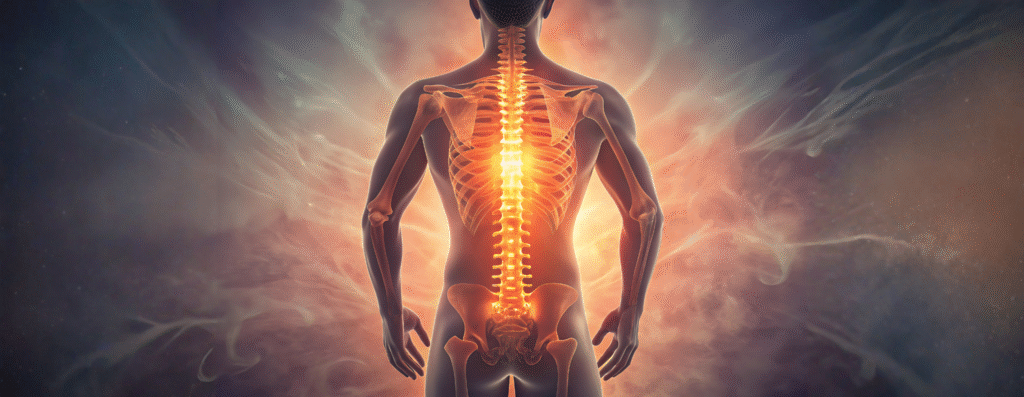
Most people didn’t suddenly abandon their bodies due to one catastrophic experience.
The departure happened incrementally over time.
During preverbal developmental stages, our nervous systems determined when full presence felt safe or dangerous.
When emotional authenticity faced rejection or dismissal…
When caregiver responsiveness proved unreliable…
When stress, danger, or demands became constant…
…the nervous system compensated through muscular tension, defensive bracing, or partial sensory withdrawal.
This represents adaptive intelligence, not dysfunction.
These protective adjustments gradually become habitual operating patterns.
Consequently, even individuals who maintain regular meditation practices remain incompletely embodied.
Even those who comprehend trauma theory intellectually stay partially disconnected.
Even people who’ve invested years in therapeutic work experience limited embodiment.
Even spiritually developed, self-aware individuals often inhabit their bodies only partially.
They articulate feelings without genuinely experiencing them somatically.
They register discomfort without maintaining present-moment contact with it.
They identify behavioral patterns without allowing bodily resolution.
Embodiment demands more than conscious awareness.
It requires nervous system-level safety as its foundation.
Distinguishing Embodiment from Emotional Discharge
A prevalent misunderstanding conflates embodiment with emotional expression.
Embodiment doesn’t mean releasing pent-up feelings explosively.
It doesn’t involve cathartic emotional purging.
It doesn’t require repeatedly narrating traumatic stories.
It doesn’t mean pushing yourself to feel sensations more intensely.
Actually, forcing embodiment typically generates additional tension.
Authentic embodiment develops when your body receives permission to remain with sensations without correction attempts.
It involves completing physical impulses that were previously interrupted.
It includes integrating emotional states that were once rejected or exiled.
It means reclaiming vital energy previously locked in defensive patterns.
This explains why embodiment work operates somatically rather than cognitively.
You don’t achieve embodiment through pattern analysis.
You achieve embodiment by allowing your nervous system to restore its natural functioning.
The Nervous System’s Role in Embodiment

Physiologically, embodiment represents a state of nervous system integration.
When survival mechanisms dominate, the body maintains constant defensive tension.
Muscles hold chronic, unnecessary contraction.
Breathing becomes restricted and shallow.
Sensations register as either overwhelming or completely numb.
Mental loops replace direct felt experience.
As the nervous system begins reorganizing, noticeable shifts occur.
Sensations become bearable and informative.
Emotions flow through without commandeering your entire system.
Physical alignment shifts spontaneously without deliberate intervention.
Your body transforms from foreign territory into familiar home.
This change can’t be manufactured through willpower.
It happens when your system no longer requires protection from lived experience.
Embodiment emerges as a consequence of nervous system regulation—not as the method that produces regulation.
The Actual Experience of Embodiment
Embodiment manifests subtly rather than dramatically.
It arrives steadily and creates profound relief.
People frequently describe it as simultaneously feeling more grounded and more expansive.
They report increased presence without effortful striving.
They notice responding thoughtfully instead of reacting automatically.
They experience clearer personal boundaries emerging naturally.
They feel less driven to justify or defend their choices.
Physical manifestations include smoother, easier breathing patterns.
Tension dissipates from the eyes, jaw, and facial muscles.
Movement becomes more fluid and coordinated.
Chronic pain conditions often diminish or resolve.
Postural changes occur organically without conscious adjustment.
Emotional experiences include feelings moving through your system rather than lodging within it.
Intensity becomes less frightening and more informative.
Greater trust develops in your internal guidance signals.
A quiet sense of fundamental okayness persists even during challenging circumstances.
This isn’t about transcending your body.
It’s about genuinely inhabiting it.
Embodiment’s Relationship to Healing

Many persistent symptoms—both physical and psychological—continue not because something is fundamentally damaged, but because something remains incomplete.
Grief that was never fully experienced.
Anger that couldn’t be safely expressed.
Fear that was never integrated.
Life force energy that was suppressed for survival.
Embodiment provides the conditions for these experiences to naturally complete themselves.
Not through intellectual analysis.
Not through determination or discipline.
But through presence sufficiently deep to allow bodily reorganization.
This explains why symptoms frequently transform when people stop attempting to eliminate them and begin listening with different quality of attention.
Your body doesn’t require correction.
It requires respectful, attuned presence.
Embodiment as Ongoing Process
Embodiment isn’t a permanent achievement reached once and maintained forever.
It unfolds progressively in successive layers.
As nervous system patterns reorganize, previously hidden material surfaces.
As your capacity expands, deeper sensations become accessible.
As safety deepens, parts of yourself that were disowned gradually return.
This isn’t backsliding or deterioration.
It’s progressive integration.
Embodiment describes the continuous journey of returning home to yourself—repeatedly, at increasingly profound levels of authenticity.
A Concluding Reflection
If you’ve dedicated significant effort to personal development yet continue feeling disconnected from your physical form…
If you remain chronically tense despite understanding your patterns…
If exhaustion persists regardless of lifestyle modifications…
If you’re emotionally aware but lack genuine freedom…
The missing element might not be deeper insight.
The missing element might be embodiment.
Embodiment doesn’t arise through increased effort or determination.
It emerges when your body finally experiences sufficient safety to release its protective grip.
Your body already contains the wisdom required for healing.
It’s been awaiting your presence and attention.
The Ultimate Embodied Awareness Guide
Embodiment is the process of becoming whole by bringing awareness back into the parts of ourselves that were shaped by survival.
These patterns formed in the nervous system long before we could think our way out of them, and they don’t unwind through insight alone.
They resolve when they are met, felt, and included in awareness.
Life is continually inviting us into this kind of embodied awareness.

When we learn to listen to the body—rather than override it—we create the conditions for integration to occur naturally.
As the nervous system reorganizes, we experience greater stability, clarity, and a sense of being more at home in ourselves.
From this place, we don’t have to force change.
We live and act with more authenticity, because less of our energy is tied up in holding ourselves together.
If these ideas resonate with you, you’ll find a deeper exploration of them in my book, If It Didn’t Hurt: How To Resolve Your Pain And Discover Your Life Purpose.
Click the link above to get a FREE pdf copy of my book.
Exploring the Embodied Path: A Peek Into My Online Course
Here’s a video I made about the importance of embodiment and my embodied path online course:
I be remiss if I didn’t mention my embodied healing online course called “The Embodied Path Online Course: Eight Steps to Expressing Your Soul’s Essence, Purpose, and Calling.”
As the name suggests, there are eight basic exercises that are at the heart of the course.
The structure involves six simple yoga poses.
But these aren’t intense strengthening poses.
While it’s important to build core strength, we often forget the need to also cultivate deep relaxation as part of the process of embodiment.
These poses are based on that idea.
When the nervous system is in defense mode, strengthening exercises can create more protective armor.
Instead, the focus is on gentle movements, promoting ease and relaxation in specific parts of the body that are connected to our survival brain.
Click the link above to check it out.
I look forward to helping you express more life,
Dr. Jay
About the Author Dr. Jay Uecker
Dr. Jay Uecker is the founder of the BioSoul Integration Center near Boulder, Colorado where he's been practicing for over 20 years. He’s an author, chiropractor, healer, and online soul integration coach who weaves Network Spinal Analysis, intuitive Parts Work, Brainspotting, SomatoRespiratory Integration, and body-centered awareness practices into his own technique, which he calls BioSoul Integration. His work helps people release unconscious resistance stored in the nervous system so they can embody their soul’s gifts and express their purpose more fully. Dr. Jay offers group healing sessions and one-on-one care, both in-person and online. He also offers a self-paced online course and a growing collection of transformational books. For a limited time, claim your FREE copy of If It Didn't Hurt: How to Resolve Your Pain and Discover Your Life Purpose.
Related Posts
Anger and Healing: Why Feeling Your Anger Is One of the Deepest Forms of Medicine
Anger and Spirituality: Why Your Anger Is Not Opposed to Your Awakening
The Root Causes of Anger: How Suppressed Life-Force Turns Into Frustration, Rage, and Pain
The Power of Anger: How Life-Force Energy Becomes Clarity, Boundaries, and Inner Knowing
The Power of Anger: When Life-Force Intelligence Speaks Through Your Body
The Spiritual Root of Anger: Discovering Its Hidden Power