
Processing Emotions: How to Integrate Their Hidden Wisdom and Gifts

The curious paradox is that when I accept myself just as I am, then I can change.
Carl Rogers, psychologist
Understanding Your Emotions Isn’t the Same as Processing Them
Processing emotions is a phrase everyone uses and almost no one stops to define.
We tell ourselves we need to do it, without ever being sure what it actually involves.
Maybe you’ve known exactly why you feel the way you do.
You can trace the anger back to where it began, and you can name the fear and the story wrapped around it.
And yet the same feeling keeps returning, as though nothing had been learned.
That’s because insight and processing are two different things.
Understanding an emotion doesn’t automatically change how it lives in you.
Here we’ll look at how to process emotions in a way that reaches past understanding and past release, and ends in something I call integration.
We’ll look at why your body plays such an important role, why thinking about your feelings can keep you stuck, and how a different relationship with your emotional experience opens the door to a deeper kind of healing.
What Does It Mean to Process an Emotion?
Here’s a video I made on the topic of processing emotions:
If you prefer to listen to audio podcasts, the BioSoul Integration Podcast and this episode can be found wherever you listen to your audio podcasts:
Consider what happens when your body digests a meal.
The food is broken down, yes.
But the point of digestion is not breakdown.
The point is that what you ate becomes energy, strength, and growth.
Emotional processing works in a similar way.
Breaking an experience down into something you can explain is only the first part.
Getting rid of the feeling isn’t the goal either, though release may play a role along the way.
The real work is building the capacity to stay with what you feel, so that the energy locked inside it can finally be put to use.
Fear, anger, sadness, and shame all hold a charge.
When that charge is met rather than avoided, it can turn from something that keeps you stuck into something that moves you forward.
The first skill here is learning to tell the strands of an experience apart.
An emotion rarely arrives as a single thing.
There are sensations in the body, a quality of feeling, and a stream of thoughts, memories, and images, all woven together.
Think of someone anxious before a big meeting.
Their chest tightens, their stomach churns, and their mind races through every way it could go wrong.
Each strand feeds the others, and from the inside it all registers as one thing: I’m anxious.
When you can sense the difference between thinking, feeling, and bodily sensation, the knot loosens and you gain room to respond differently.
Untangling Thoughts, Sensations, and Feelings
Most of us are skilled thinkers.
We’ve spent years learning to analyze, explain, and solve.
That skill serves us well in countless situations, but it becomes a habit so automatic that it follows us into our emotional lives.
A feeling stirs, and our attention leaps straight to questions.
Why is this happening?
What does it mean?
How do I fix it?
Before we’ve felt the emotion, we’re already studying it from a distance.
This is why so many people can describe their emotions in great detail while rarely feeling them directly.
There’s often a good reason for it.
A child who learns that anger is dangerous, or that tears make things worse, will find a way to cope.
Often that way is to retreat into the head, where it feels safer and more controlled.
The strategy works then.
Decades later, it can still be running, quietly keeping us one step removed from our own feelings.
So the answer is not to fight the thinking mind.
It’s to honor what it has been protecting, and gently ask it to share the stage with two other forms of intelligence: the body and the heart.
Why Thinking About Your Emotions Can Keep You Stuck

One of the challenges we face as adults is that we’ve become extraordinarily good at thinking.
We’ve spent our lives learning to analyze, interpret, and solve problems.
That’s incredibly useful much of the time.
But thinking becomes such a deeply ingrained habit that it’s often our automatic response to everything, including emotions.
An emotion begins to arise in the body, and almost immediately our attention moves into thought.
Why am I feeling this?
What caused it?
What does it mean?
What am I supposed to do about it?
Before we’ve really experienced the emotion itself, we’re already thinking about it.
Many people recognize their emotions primarily through their thoughts.
They know they’re angry because they’re thinking angry thoughts.
They know they’re afraid because they’re imagining frightening possibilities.
What often gets overlooked is the actual felt experience of the emotion in the body.
Thinking isn’t bad.
Understanding our history and recognizing our patterns can be tremendously valuable, and it’s an important step in healing.
But understanding something and transforming your relationship with it are two different things.
Sometimes thinking also serves another purpose: it protects us from having to feel.
Imagine a child who grows up in an environment where expressing anger isn’t safe, or where showing sadness makes things worse.
That child’s system learns to adapt.
One strategy might be to move away from feeling and into thinking, analyzing, explaining, staying in control, staying academic about it.
That strategy may have been incredibly useful at one time.
But years later, whenever an uncomfortable emotion arises, the thinking mind may immediately take over.
So we’re not trying to fight the thinking mind.
We can recognize the important protective role it has played, and begin inviting it to relax a little, to make room for another kind of intelligence: the intelligence of the body, and the intelligence of the heart.
The Body’s Role in Processing Emotions
Intense emotions have a way of swallowing us whole.
When a frightened part of you takes over, you don’t experience it as one part of you.
You simply become the fear, and the world looks dangerous through its eyes.
Now notice what shifts when you track the fear in the body: the tight chest, the knot in the stomach.
You’re suddenly doing something the fear itself cannot do.
You’re observing it.
The difference between I am afraid and a part of me is afraid may sound small, but it changes everything.
It shows you there is a you that can be aware of fear without being consumed by it.
Call that awareness the heart, the soul, presence, or the higher self.
The label matters less than what it makes possible.
From this wider vantage point, curiosity and compassion become available.
You stop looking through the frightened part and start looking at it.
And as you do, it often begins to tell you things: that it feels young, that it’s tired, that it learned long ago the world wasn’t safe.
That kind of knowing doesn’t come from analysis.
It arrives on its own when a part finally feels it’s being met rather than managed.
“I Am Afraid” vs. “A Part of Me Is Afraid”

Plenty of advice about emotional processing centers on getting feelings out.
Cry it out, shout it out, shake it out.
There is real value in that, and some stages of healing call for it.
But release has a limit.
When it becomes our only approach, it can quietly turn into another way of pushing the feeling away.
Imagine a sad part of you that you try to release every time it surfaces.
What is that part learning about its place in your life?
Likely that it isn’t welcome.
What it may need instead is the opposite of expulsion.
It needs someone to notice what it has been carrying, to wonder why, and to care.
When that happens, the feeling often softens by itself.
Nothing was forced.
The relationship simply changed.
The Intelligence of the Heart

Different people have different language for this larger awareness.
Some call it the higher self.
Some call it the soul.
Others simply call it awareness, presence, or the heart.
The name matters far less than the quality of awareness that becomes available.
When we’re completely identified with an emotional part, we see through its limited perspective.
If it’s frightened, everything looks dangerous.
If it’s angry, everything looks unfair.
If it carries shame, we may see ourselves as fundamentally inadequate.
But when there’s a little more space around that part, we begin to see it, rather than see through it.
Instead of being caught in fear, we become curious about the frightened part.
Instead of being overwhelmed by sadness, we begin to feel compassion for the part that is sad.
And sometimes, when that happens, we begin to know things about that part that weren’t accessible before.
We might sense that it feels young.
We might sense what it has had to endure, and what it learned about the world.
This isn’t something we figure out through intellectual analysis.
It comes through a kind of knowing that emerges when we’re present with the experience differently.
That is how we extract the intelligence and wisdom directly from the energy bound in our system.
The emotional part begins to reveal itself because we’re finally able to meet it without being overwhelmed by it.
And this is where emotional processing begins to move into something deeper.
Beyond Processing Emotions: Integration and the Gifts Within
Here is the part I find most moving.
The parts of us carrying pain are also carrying gifts, and those gifts are often buried precisely because of the pain.
Beneath chronic anger there may be a sharp sense of justice and the strength to hold healthy boundaries.
Inside a fearful part there may be a finely tuned radar for what truly needs our attention.
Within sadness there is often a deep well of tenderness, empathy, and the ability to connect.
When these parts stay locked in old patterns of protection, we only ever meet their harder side.
As we approach them with compassion, their qualities begin to surface and become part of who we are, rather than ideas we hold about ourselves.
The energy that once went into bracing and resisting is then freed up for creativity, connection, and a fuller life.
That is what I mean by emotional integration.
Its aim is not to eliminate what’s uncomfortable.
It’s to let the wisdom in those parts join a larger and more whole sense of who you are, so that what once caused suffering becomes fuel for change.
The Hidden Gifts Within Difficult Emotions
Here’s something else that’s really important.
These emotional parts of ourselves aren’t only carrying pain.
They are also carrying intelligence, wisdom, and gifts that may have been hidden or unavailable to us because of that pain.
Think about a part of you that has been carrying anger.

Beneath that anger there may be a tremendous capacity to recognize injustice, establish healthy boundaries, and stand up for yourself.
A part carrying fear may have a finely developed sensitivity, an ability to recognize what needs attention and to support wise choices.
Even a part carrying sadness may hold a profound capacity for tenderness, empathy, and connection.
But when these parts are caught in old patterns of protection and pain, we may only experience their difficult side.
As we begin to meet them with compassion and understanding, their gifts begin to emerge, and those gifts become part of who we are.
Not just something we understand intellectually, but qualities we can actually embody and draw upon in our lives.
The energy once tied up in fear, resistance, or protection becomes available for connection, for creativity, for growth, for living more fully.
This is what I mean by integration.
We’re not simply trying to eliminate something uncomfortable.
We’re allowing the wisdom, intelligence, and gifts of those parts to become part of a larger, more whole experience of ourselves.
Something that was once a source of suffering becomes fuel for transformation.
Why Emotional Release Isn’t Always the Answer

A great deal of advice about emotional processing centers on getting feelings out.
You cry them out, shout them out, or shake them out, and there’s real value in that, since some stages of healing call for it.
But release has its limits.
When it becomes our only approach, it can quietly turn into another way of pushing the feeling away.
Imagine a sad part of you that you try to release every time it surfaces.
What is that part learning about its place in your life?
The likely answer is that it isn’t welcome.
What it may need instead is the opposite of expulsion: someone who notices what it has been carrying, wonders why, and cares.
When that happens, the feeling often softens on its own.
Nothing was forced.
The relationship simply changed.
Processing Emotions: A 6-Step Practice

Here is a simple way to practice how to process emotions the next time something difficult comes up.
1. Get curious.
Instead of reacting, simply wonder what’s going on inside you.
2. Notice your mind.
See whether it’s analyzing, explaining, or trying to solve something.
Rather than trying to stop it, just acknowledge what it’s doing.
3. Turn toward the body.
If it feels okay, scan for where the emotion lives.
The chest, belly, throat, and shoulders are common places.
4. Explore the sensation.
Let yourself be interested in it rather than trying to change it.
Notice its size, shape, texture, and any movement.
Stay with it for a while, without pushing for anything to happen.
5. Sense the part behind it.
You may get an impression of the part that is holding this feeling.
It might seem hard or soft, heavy or dense, like a wall or a shield.
It may feel very young, or worn out from years of effort.
There’s no need to invent a story, so simply let whatever wants to be known show itself.
6. Check your attitude toward it.
Notice whether you’re wishing it would leave, feeling irritated with it, or finding some curiosity and warmth.
This is the turning point, because now you’re in relationship with the part instead of fused with it.
If at any moment it feels like too much, you don’t have to push on.
You can look around the room, feel your feet on the floor, and come back another time.
The goal isn’t to feel more.
It’s to relate differently to what you already feel.
Frequently Asked Questions About Processing E
Frequently Asked Questions About Processing Emotions

What does it mean to process an emotion?
Processing an emotion means developing the capacity to be with it, in the body and with awareness, so the energy bound up in it can become available for something new.
It’s about transformation, not just understanding or getting rid of the feeling.
Is emotional release the same as processing feelings?
Not exactly.
Emotional release, like crying or shaking, can be valuable at certain stages.
But processing feelings at a deeper level involves changing your relationship with the emotion, so that you’re welcoming it rather than trying to push it away.
Why can’t I think my way through my emotions?
Thinking is useful for understanding your history and patterns, but it can also be a protective strategy that keeps you from feeling.
Understanding an emotion and transforming your relationship with it are two different things.
What is emotional integration?
Emotional integration is the process of extracting the wisdom, intelligence, and gifts from an emotional part and embodying them.
What once caused suffering becomes fuel for living more fully.
Beginning a Different Relationship with Your Emotions
Processing emotions, in the deepest sense, isn’t about eliminating what’s uncomfortable.
It’s about learning to meet your inner experience with presence, curiosity, and care, and discovering the gifts that have been waiting inside it all along.
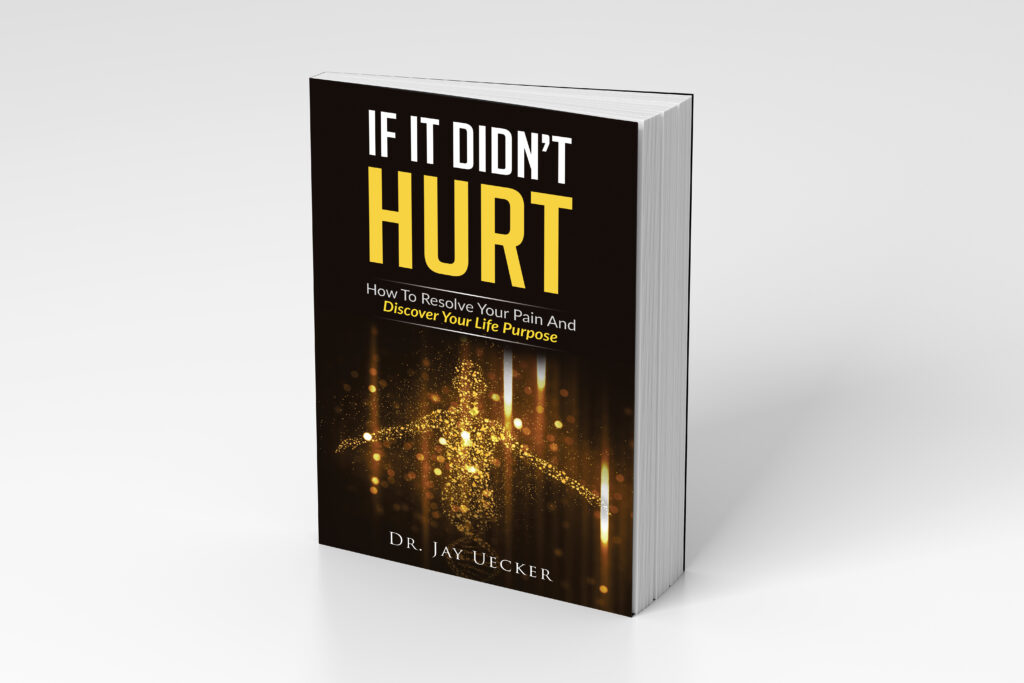
If you’d like to explore this further, I wrote a book called If It Didn’t Hurt: How to Resolve Your Pain and Discover Your Life Purpose, a guide to integrating the intelligence and wisdom in your emotional experience.
I also work with people one-on-one, online from around the world and in person here in Lafayette, Colorado, to help them integrate their emotional experience and embody their soul’s gifts and wisdom.
Click the following link to get your FREE pdf copy of If It Didn’t Hurt.
I look forward to helping you express more life,
Dr. Jay
About the Author Dr. Jay Uecker
Dr. Jay Uecker is the founder of the BioSoul Integration Center near Boulder, Colorado where he's been practicing for over 20 years. He’s an author, chiropractor, healer, and online soul integration coach who weaves Network Spinal Analysis, intuitive Parts Work, Brainspotting, SomatoRespiratory Integration, and body-centered awareness practices into his own technique, which he calls BioSoul Integration. His work helps people release unconscious resistance stored in the nervous system so they can embody their soul’s gifts and express their purpose more fully. Dr. Jay offers group healing sessions and one-on-one care, both in-person and online. He also offers a self-paced online course and a growing collection of transformational books. For a limited time, claim your FREE copy of If It Didn't Hurt: How to Resolve Your Pain and Discover Your Life Purpose.