
Emotional Release: A Valuable Stage of Healing, and What Comes Next

I was better after I cried, than before.
— Charles Dickens’s Great Expectations (1861)
Emotional Release Is Only Part of the Story
Emotional release is one of the most talked-about ideas in healing, and for good reason.
Crying, shouting, laughing, shaking, moving, pounding pillows, and journaling can all let something out that has been held in for a long time, and the relief afterward can be real.
I don’t want to dismiss any of it.
But I’ve also noticed over many years of working with people that release is not the whole story.
There comes a point in the healing journey when something different is needed, and when continuing to release the same emotions over and over starts to bring diminishing returns.
In this article I’ll explain why emotional release matters, where it fits as one stage of a larger process, and what to do when it’s time to move from release to integration.
If you’d like to go deeper on the broader topic, I’ve also written about processing emotions and how to process emotions step by step.
What Is Emotional Release?
Here’s a video I made on the topic of processing emotions:
If you prefer to listen to audio podcasts, the BioSoul Integration Podcast and this episode can be found wherever you listen to your audio podcasts:
Emotional release is the act of expressing or discharging a feeling so that it moves through the body and mind instead of staying locked inside.
It can look like crying, yelling into a pillow, shaking, deep breathing, vigorous movement, or simply talking until something lets go.
Many people describe a sense of lightness afterward, as though a pressure they had been carrying finally eased.
That makes sense, because suppressed emotions take energy to hold down, and when we stop holding them down, some of that energy becomes available again.
Why Emotional Release Matters
For a lot of us, learning to release emotions at all is a significant achievement.
Many people grew up in environments where anger wasn’t safe to show or sadness made things worse, so they learned early to keep everything inside.
If that’s your history, emotional release may be exactly what you need first.
It can break the habit of suppression, show you that feelings can be survived, and bring you back in touch with parts of your experience you had lost contact with.
There are stages of the healing process where release is necessary, and trying to skip it can leave a person intellectualizing their pain without ever feeling it.
So if you’re in a season where the tears or the anger need to come out, let them come.
Emotional Release as One Stage of the Healing Process
As we become more aware of what’s happening inside us, the kind of work we need tends to change.
Early on, the task is often to stop suppressing and begin to feel.
That’s where emotional release does its best work, because it opens the door and lets the energy move.
But healing isn’t a single skill that we repeat forever.
It unfolds in stages, and each stage asks for something different from us.
At some point, a person who has been releasing diligently may start to notice that the same emotions keep returning, even after they’ve been cried out or shaken out many times.
This isn’t a sign that you’re doing something wrong.
It’s often a sign that you’ve reached the edge of what release can offer, and that a new stage is ready to begin.
When Emotional Release Stops Working

Here’s a question I find useful.
Imagine there’s a part of you that carries anger, and every time it shows up, you respond by trying to release it—to get it out.
What kind of relationship are you having with that part?
On some level, the message it receives is, I don’t want you here, and I need you to go away.
Continuing to focus on getting emotions out of the system can quietly become another way of trying to get away from them.
The part never gets what it actually needs, so it returns, and we release it again, and the cycle repeats.
There’s also a more subtle issue, which is that we’re releasing the same energy repeatedly.
If an emotion is tied to an old pattern, discharging it provides relief for a while, but the pattern that generates it is still in place.
So we can find ourselves on a loop of building up, releasing, feeling better, and building up again, without ever changing the underlying relationship.
That’s the point where integration becomes the more useful next step.
If you’ve experienced powerful emotional releases only to find the same feelings returning, it may help to understand the difference between releasing and processing emotions.
In my article on processing emotions and discovering their hidden gifts, I explore how difficult feelings can become doorways to wisdom, energy, and parts of ourselves waiting to be integrated.
What Our Emotions May Actually Be Asking For

Perhaps what a part carrying anger really needs isn’t to be pushed out.
Perhaps what it needs is to be welcomed.
It may need someone to recognize what it has been carrying, to understand why it’s there, and to care about what happened to it.
When we meet a part from that place of genuine compassion, the emotional experience can begin to transform.
Not because we forced it to change, but because the relationship changed.
Sometimes healing doesn’t come from doing something to the emotion.
It comes from how we relate to it, and how we are with it.
From Emotional Release to Integration
Think about how your body treats food.
Digestion doesn’t just break a meal down, it transforms it into energy and nourishment you can use.

Integration is the emotional version of that process.
Instead of getting an emotion out of your system, you take in what it has to offer.
The parts of us that carry pain are also carrying intelligence, wisdom, and gifts that were hidden by the pain.
Beneath anger, there may be a strong capacity to recognize injustice, set healthy boundaries, and stand up for yourself.
Within fear, there may be a finely tuned sensitivity to what needs your attention and a gift for making wise choices.
Inside sadness, there may be a deep well of tenderness, empathy, and connection.
When these parts stay caught in old patterns of protection, we only experience their difficult side.
As we begin to meet them with understanding, their gifts start to emerge, and they become part of who we are rather than something we merely understand.
The energy that was tied up in fear, resistance, and protection becomes available for connection, creativity, growth, and living more fully.
That is what I mean by emotional integration.
It isn’t about eliminating something uncomfortable.
It’s about letting the wisdom of those parts become part of a larger and more whole experience of yourself, so that what was once a source of suffering becomes fuel for transformation.
Emotional Release vs. Emotional Integration
The two aren’t opposites, and they aren’t in competition.
They belong to different stages of the same journey.
| Emotional release | Emotional integration | |
|---|---|---|
| Main focus | Expressing or discharging the feeling | Relating to the part carrying the feeling |
| Relationship to the emotion | Moving it out | Welcoming it and learning from it |
| What it offers | Relief, movement, reconnection with feeling | Wisdom, gifts, and lasting change in the pattern |
| When it’s most useful | When feelings have been held in or suppressed | When the same feelings keep returning after release |
Release can open the door, and integration is what lets you walk through it.
Signs You May Be Ready to Move Beyond Release
If any of these feel familiar, it may be time to bring integration into your process.
The same emotions keep returning, even after you’ve cried or shaken them out many times.
Release brings temporary relief but doesn’t seem to change the pattern.
You find yourself wanting the feeling to be gone more than you want to understand it.
You can explain your emotions well, but you rarely feel curious or kind toward them.
You sense that something underneath wants to be recognized rather than expelled.
Noticing any of this isn’t a problem.
It usually means you’ve developed enough awareness to work in a new way.
A Simple Practice for Moving From Release to Integration

The next time an uncomfortable emotion comes up, you can try this instead of immediately trying to release it.
1. Notice what your mind is doing.
See whether it’s analyzing, explaining, or trying to fix the feeling, and simply acknowledge it without trying to stop it.
2. Bring attention into your body.
If it feels comfortable, find where you notice the emotion, whether in the chest, belly, throat, or shoulders.
3. Become interested in the sensation.
Explore its size, shape, texture, and any movement, and stay with it for a little while without trying to change it.
4. Sense the part that’s carrying it.
You may get an impression of how it feels, perhaps hard or soft, heavy or dense, young or tired, like a wall or a shield, and you don’t have to invent a story about it.
5. Notice how you feel toward it.
Are you wishing it would go away, feeling frustrated with it, or finding some curiosity and compassion?
This is where something important can happen, because you begin relating to the part instead of being fully merged with it.
If at any point it feels overwhelming, there’s no need to push through.
You can bring your attention back to the room around you and return when you have more capacity.
The point isn’t to feel more, but to build a different relationship with what you’re already feeling.
If you’d like to explore more deeply how to move beyond emotional release and begin working with your feelings differently, my guide on how to process emotions in seven practical steps offers a place to begin.
It walks you through recognizing emotions, sensing them in your body, meeting the parts carrying them with compassion, and discovering what they have to offer.
Frequently Asked Questions About Emotional Release
Is emotional release good for you?
Yes, in many cases.
It can relieve the pressure of suppressed feelings and reconnect you with your experience, especially if you’ve spent years holding things in.
What are the signs of emotional release?
Common signs include crying, trembling, sighing, yawning, a wave of heat or cold, or a sudden sense of lightness afterward.
How do you release trapped emotions?
People often use movement, breathwork, crying, shaking, journaling, or talking with someone they trust.
It can also help to bring attention to where the emotion sits in your body and let it move naturally.
Why do the same emotions keep coming back after I release them?
Often because the part of you carrying the emotion hasn’t yet been met and understood.
When the relationship stays the same, the pattern can keep producing the same feelings, which is where integration can help.
Is emotional release the same as emotional processing?
Not exactly.
Release is one part of processing, but processing also involves experiencing, understanding, and changing your relationship with the emotion.
Can you release emotions without crying?
Yes.
Release can happen through movement, breath, sound, or quiet awareness, and tears aren’t required.
Emotional Release Is a Beginning, Not an Ending
Emotional release is a valuable stage of the healing process, and for many of us, it’s an essential one.
But it’s only one stage.
Eventually, the invitation is to move beyond releasing the same emotional energy again and again and begin integrating it.
When we do, the parts of ourselves carrying difficult emotions are no longer simply problems to get rid of.
They become doorways to wisdom, energy, and gifts that can enrich our lives.
What if the pain you’ve been trying to get rid of is actually holding something you need?
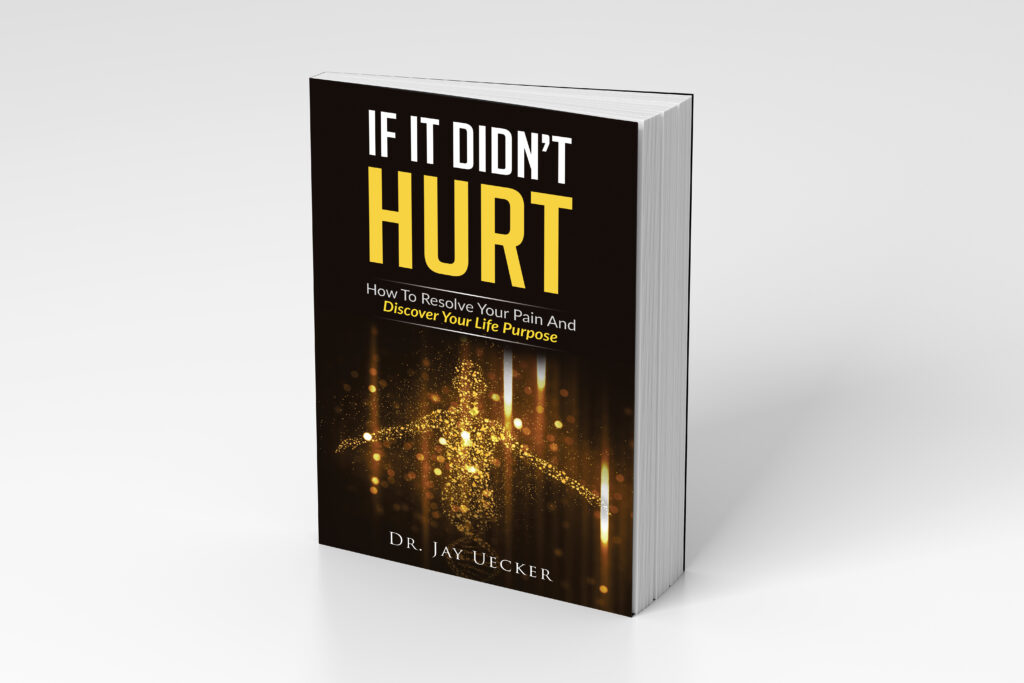
That’s the central idea behind my book, If It Didn’t Hurt: How to Resolve Your Pain and Discover Your Life Purpose.
In it, I explore how emotional and physical pain can become a doorway to deeper self-understanding, healing, and the discovery of parts of ourselves that have been waiting to be embraced and integrated.
I’d love to give you a free copy.
Click the link to get your free copy of If It Didn’t Hurt.
Discover how the very things you’ve been struggling with may hold the keys to your next stage of growth and transformation.
I look forward to helping you express more life,
Dr. Jay
About the Author Dr. Jay Uecker
Dr. Jay Uecker is the founder of the BioSoul Integration Center near Boulder, Colorado where he's been practicing for over 20 years. He’s an author, chiropractor, healer, and online soul integration coach who weaves Network Spinal Analysis, intuitive Parts Work, Brainspotting, SomatoRespiratory Integration, and body-centered awareness practices into his own technique, which he calls BioSoul Integration. His work helps people release unconscious resistance stored in the nervous system so they can embody their soul’s gifts and express their purpose more fully. Dr. Jay offers group healing sessions and one-on-one care, both in-person and online. He also offers a self-paced online course and a growing collection of transformational books. For a limited time, claim your FREE copy of If It Didn't Hurt: How to Resolve Your Pain and Discover Your Life Purpose.
Related Posts
How to Process Emotions: A Step-by-Step Guide to Emotional Healing
The Power of Anger: How Life-Force Energy Becomes Clarity, Boundaries, and Inner Knowing
Processing Emotions: How to Integrate Their Hidden Wisdom and Gifts
Anger and Spirituality: Why Your Anger Is Not Opposed to Your Awakening
Anger and Healing: Why Feeling Your Anger Is One of the Deepest Forms of Medicine
The Root Causes of Anger: How Suppressed Life-Force Turns Into Frustration, Rage, and Pain